Anúncios
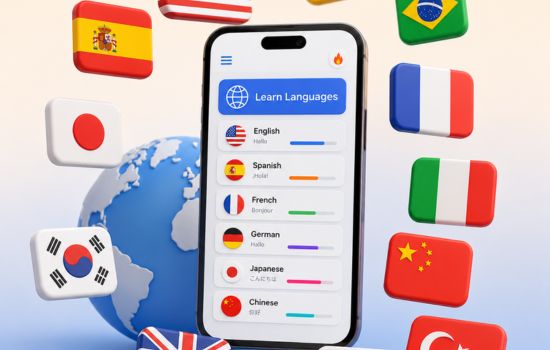
Learning a new language has never been more accessible, thanks to the rise of mobile applications designed to make language acquisition fun, flexible, and effective for learners worldwide.
Whether you’re preparing for a vacation abroad, advancing your career, or simply exploring a new culture, language learning apps offer personalized lessons that fit seamlessly into your daily routine. These digital tools have revolutionized how we approach language education, transforming commute time and coffee breaks into productive learning sessions.
Anúncios
From gamified experiences that make vocabulary stick to AI-powered conversations that build real-world speaking confidence, today’s language apps cater to diverse learning styles and proficiency levels. Let’s explore the most effective applications available and discover how they can accelerate your journey to fluency.
🌍 Why Language Learning Apps Have Become Essential
Traditional classroom settings, while valuable, often struggle to provide the flexibility modern learners need. Language apps bridge this gap by delivering instruction anytime, anywhere, adapting to individual schedules and learning paces. The convenience factor alone has made these applications indispensable for millions of users globally.
Anúncios
Beyond convenience, these platforms leverage cutting-edge technology to personalize the learning experience. Adaptive algorithms track your progress, identify weak areas, and adjust difficulty levels accordingly. This intelligent approach ensures you’re always challenged but never overwhelmed, maintaining the delicate balance that keeps motivation high.
The social connectivity features built into many apps create communities of learners who support and challenge each other. This peer interaction replicates the collaborative aspects of traditional classrooms while adding global reach that physical institutions simply cannot match.

📱 Top Features to Look for in Language Learning Apps
Not all language apps are created equal, and understanding what distinguishes exceptional platforms from mediocre ones helps you invest your time wisely. The best applications combine multiple teaching methodologies to address different aspects of language acquisition simultaneously.
Interactive Speaking Practice
Speech recognition technology has advanced tremendously, allowing apps to evaluate pronunciation with impressive accuracy. Quality applications provide immediate feedback on your spoken attempts, highlighting specific sounds or intonations that need improvement. This real-time correction accelerates speaking confidence far faster than passive listening alone.
Some platforms even incorporate AI conversation partners that simulate natural dialogues, letting you practice ordering food, asking directions, or discussing hobbies in a pressure-free environment. These virtual interactions prepare you for real-world conversations without the anxiety of speaking with native speakers prematurely.
Spaced Repetition Systems
Memory science reveals that reviewing information at strategically spaced intervals dramatically improves long-term retention. Elite language apps implement sophisticated spaced repetition algorithms that present vocabulary and grammar concepts precisely when you’re about to forget them, cementing knowledge into permanent memory.
This approach transforms learning from tedious memorization into an efficient, scientifically-backed process. Instead of cramming hundreds of words with minimal retention, you build a solid foundation that grows steadily over time.
Cultural Context and Real-World Content
Language exists within cultural contexts, and understanding idioms, customs, and social norms enriches communication beyond grammatical correctness. Superior apps integrate cultural lessons, explaining why certain phrases exist and when specific expressions are appropriate. This contextual knowledge prevents awkward misunderstandings and deepens your connection with the language.
Authentic content from news articles, podcasts, and videos exposes you to how native speakers actually communicate, complete with colloquialisms and regional variations. This real-world immersion complements structured lessons beautifully.
🎯 Popular Language Learning Applications Compared
The market offers numerous options, each with distinct philosophies and methodologies. Understanding their strengths helps you choose the platform that aligns with your learning style and objectives.
Duolingo: Gamification Meets Accessibility
Duolingo has become synonymous with language learning apps, largely due to its completely free core offering and playful approach. The app transforms lessons into bite-sized games where you earn points, maintain streaks, and compete with friends. This gamification strategy proves remarkably effective at maintaining engagement over extended periods.
The platform covers an impressive array of languages, from popular choices like Spanish and French to less common options such as Welsh and Hawaiian. Lessons progress logically through reading, writing, listening, and speaking exercises that gradually increase in complexity. While critics sometimes point to limited conversational depth, Duolingo excels as an entry point for beginners or a supplementary tool for intermediate learners.
Busuu: Community-Powered Learning
Busuu distinguishes itself through its integrated community of native speakers who provide feedback on your exercises. When you complete writing or speaking tasks, actual humans review your work and offer corrections, adding a personal touch that algorithms cannot replicate. This peer-to-peer interaction accelerates improvement and creates meaningful international connections.
The structured curriculum follows recognized language frameworks, with clear proficiency goals aligned to the Common European Framework of Reference (CEFR). Official certificates are available upon course completion, adding tangible credentials to your learning achievements. The combination of AI-driven lessons and human feedback creates a comprehensive learning ecosystem.
Babbel: Conversation-Focused Methodology
Babbel prioritizes getting learners speaking quickly through dialogues based on realistic scenarios. Rather than exhaustive vocabulary lists, the app focuses on practical phrases you’ll actually use in conversations, travel situations, and daily interactions. This pragmatic approach appeals to learners with immediate communication needs.
Courses are crafted by linguistic experts rather than algorithms alone, ensuring pedagogical soundness and cultural accuracy. The app’s review manager implements spaced repetition intelligently, while speech recognition technology polishes pronunciation. Babbel operates on a subscription model, reflecting its premium positioning and comprehensive content.
🚀 Maximizing Your Progress with Language Apps
Downloading an app represents just the first step; consistent, strategic use determines actual fluency gains. Implementing proven learning strategies alongside app usage multiplies effectiveness exponentially.
Establish a Daily Practice Routine
Consistency trumps intensity in language acquisition. Dedicating fifteen focused minutes daily produces superior results compared to occasional multi-hour marathon sessions. Your brain needs regular exposure to consolidate new information and build neural pathways associated with the target language.
Anchor your practice to existing habits—perhaps during breakfast, commute, or before bed. This habit stacking technique leverages established routines to ensure learning becomes automatic rather than requiring constant willpower. Most successful polyglots emphasize that daily engagement, however brief, accelerates progress more than any other single factor.
Combine Multiple Learning Modalities
While apps provide excellent foundational instruction, complementing them with additional resources creates well-rounded competency. Listen to podcasts in your target language during workouts, watch subtitled movies to train your ear, or read children’s books to build vocabulary contextually. Each modality reinforces learning from different angles.
Language exchange partners found through apps or websites offer invaluable speaking practice with real humans. These conversations expose you to natural speech patterns, slang, and conversational flow that structured lessons cannot fully capture. The nervousness of early exchanges gives way to growing confidence as your abilities solidify.
Set Specific, Measurable Goals
Vague aspirations like “become fluent” lack the specificity needed to maintain motivation during challenging periods. Instead, define concrete objectives: “complete the intermediate course by June,” “hold a five-minute conversation about hobbies,” or “read a news article without translation assistance.” These tangible targets provide direction and enable you to celebrate incremental victories.
Track your progress visually through journals, apps, or spreadsheets. Seeing accumulated study hours, vocabulary counts, or completed lessons provides psychological reinforcement that sustains effort through inevitable plateaus. Progress becomes visible rather than abstract, fueling continued commitment.
💡 Overcoming Common Challenges in App-Based Learning
Despite their advantages, language apps present certain limitations and challenges that learners should anticipate and address proactively. Awareness of these potential pitfalls enables you to develop compensatory strategies.
Breaking Through Intermediate Plateaus
Many learners experience rapid initial progress before hitting frustrating plateaus where improvement seems to stall. This phenomenon occurs naturally as you exhaust high-frequency vocabulary and encounter more complex grammatical structures. Recognizing this pattern as normal prevents discouragement and premature abandonment.
Plateaus signal the need to increase challenge levels—perhaps by switching to advanced content, engaging native speakers, or exploring specialized vocabulary related to your interests. Apps that offer branching paths or customizable learning tracks help navigate this transitional phase effectively.
Maintaining Motivation Over Months
Initial enthusiasm eventually fades, and sustaining practice through less exciting phases demands deliberate motivation management. Gamification elements help, but external accountability often proves more powerful. Study groups, whether virtual or in-person, create social pressure that keeps you showing up even when inspiration wanes.
Rewarding yourself for milestones—perhaps a meal at an authentic restaurant representing your target culture, or a conversation with a native speaker—reinforces positive associations with learning. These celebrations acknowledge effort and refresh determination for the journey ahead.
Balancing App Learning with Real Communication
Apps excel at structured instruction but cannot fully replicate spontaneous conversation dynamics. The comfort of controlled environments sometimes creates reluctance to engage in messy, unpredictable real-world interactions. Deliberately seeking speaking opportunities, however uncomfortable initially, bridges this gap.
Language meetups, online tutoring platforms, and conversation exchange websites provide low-stakes opportunities to apply app-learned skills. Each real conversation, regardless of mistakes, builds practical competency that no app exercise can substitute.
🌟 Advanced Features in Premium Language Apps
While free versions offer substantial value, premium subscriptions unlock enhanced functionality that serious learners often find worthwhile. Understanding these premium features helps you evaluate whether upgrading aligns with your goals and budget.
Offline access allows learning during flights, subway commutes, or locations with unreliable connectivity. Downloadable lessons ensure your routine continues uninterrupted regardless of circumstances. For frequent travelers or those with limited data plans, this feature alone often justifies subscription costs.
Personalized learning paths adapt content to your specific interests—business vocabulary for professionals, medical terminology for healthcare workers, or culinary terms for food enthusiasts. This customization makes learning more relevant and engaging than generic curricula designed for undefined audiences.
Advanced analytics provide detailed insights into your learning patterns, identifying specific weaknesses and tracking improvement across various competencies. These data-driven reports help optimize study strategies and allocate time where it yields maximum benefit.
🎓 Integrating Apps with Formal Language Education
Language apps complement rather than replace traditional instruction methods. Students enrolled in formal courses discover that apps provide excellent supplementary practice between classes, reinforcing concepts introduced by instructors and offering additional exposure to target languages.
Teachers increasingly recommend specific apps as homework assignments, appreciating the automated feedback and progress tracking that reduce grading burdens. The combination of human instruction’s nuanced explanation with app-based repetitive practice creates comprehensive learning experiences superior to either approach alone.
Self-directed learners benefit from structuring app usage around established curricula like those following CEFR standards. This framework ensures balanced development across reading, writing, listening, and speaking skills rather than inadvertently neglecting certain competencies.
🔮 The Future of Language Learning Technology
Emerging technologies promise even more immersive and effective learning experiences in coming years. Virtual reality applications already enable simulated conversations in realistic environments—ordering at virtual cafés, navigating digital airports, or participating in holographic business meetings. These environments provide consequence-free practice that feels remarkably authentic.
Artificial intelligence continues advancing, with conversation partners becoming increasingly sophisticated and indistinguishable from humans. Future apps may provide real-time translation assistance during live conversations, gradually fading support as your competency grows—like training wheels that automatically adjust to your skill level.
Neuroscience research into optimal learning states may inform adaptive apps that recognize when you’re most receptive to new information versus when review would prove more productive. Biometric feedback could optimize lesson timing and difficulty for maximum retention with minimum cognitive strain.
✨ Choosing the Right App for Your Learning Journey
With dozens of quality options available, selecting the ideal app depends on your specific circumstances, learning preferences, and objectives. Consider starting with free versions of multiple platforms, experimenting for a week or two to identify which interface, methodology, and content style resonates most strongly.
Your target language matters too—some apps excel with popular languages but offer limited content for less common options. Research user reviews specifically mentioning your chosen language to ensure quality doesn’t vary dramatically across the platform’s offerings.
Budget considerations factor significantly into long-term sustainability. While premium features enhance learning, free alternatives often provide sufficient functionality for reaching intermediate proficiency. Prioritize consistency over premium features—steady practice with a basic app outperforms sporadic use of the most advanced platform.
Language learning apps have democratized access to quality instruction, making polyglotism achievable for anyone with a smartphone and dedication. Whether you’re taking first steps in a new language or polishing advanced skills, these digital tools offer unprecedented convenience and effectiveness. The key lies not in finding the perfect app but in committing to consistent practice, complementing digital learning with real-world application, and maintaining curiosity about the cultures behind the words. Your linguistic journey awaits—download an app today and take that exciting first step toward fluency. 🌎
