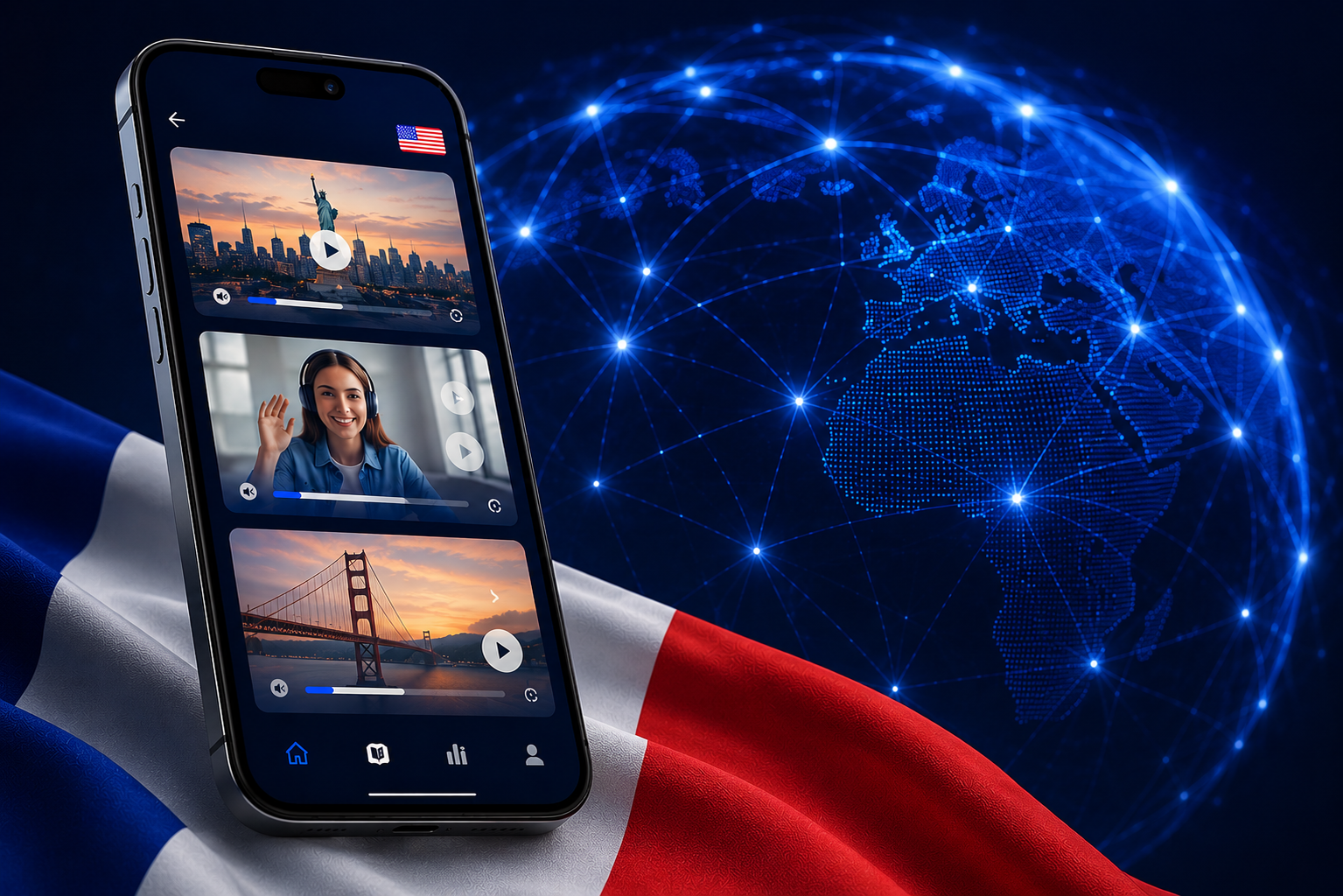
Learning English through French? It’s not only possible but increasingly popular thanks to innovative mobile applications designed for multilingual learners seeking flexibility and effectiveness.
The digital age has transformed language learning completely, making it accessible to anyone with a smartphone. For French speakers wanting to master English, specialized apps offer structured courses that respect linguistic nuances while providing interactive, engaging content tailored to specific learning styles.
Whether you’re a native French speaker or someone comfortable learning in French, these applications bridge the gap between two of the world’s most influential languages. The journey from “Bonjour” to “Hello” becomes smoother when your learning interface speaks your current language fluently. 🌍
Why French Speakers Need Specialized English Learning Apps
French and English share fascinating connections—both influenced by Latin roots and historical exchanges. However, their grammatical structures, pronunciation patterns, and idiomatic expressions differ significantly. A generic English course designed for speakers of any language might miss crucial explanations that French speakers specifically need.
Apps designed for French-speaking learners address common challenges like the notorious English “th” sound, which doesn’t exist in French. They explain verb conjugations by drawing parallels with French grammar, making complex concepts immediately understandable. This targeted approach accelerates learning and reduces frustration.
Additionally, cultural context matters tremendously. French speakers often need different conversation scenarios than, say, Spanish or Mandarin speakers. Business communication styles, social etiquette, and humor vary across cultures. Apps with French interfaces naturally incorporate these cultural bridges.
Key Features That Make Language Apps Effective 📱
Not all language learning applications are created equal. The most effective platforms share several critical characteristics that distinguish them from basic vocabulary trainers or simple flashcard apps.
Interactive Speech Recognition Technology
Modern apps use advanced speech recognition to evaluate pronunciation accuracy. For French speakers learning English, this technology provides immediate feedback on challenging sounds. You can practice the difference between “tree” and “three” until the app confirms you’ve mastered it—something impossible with traditional textbooks.
This feature transforms passive learning into active practice. Instead of merely reading about pronunciation rules, you speak directly into your device and receive instant correction. It’s like having a patient tutor available 24/7, without judgment or time constraints.
Adaptive Learning Algorithms
The best applications learn from your progress, adjusting difficulty and content based on your performance. If you consistently struggle with conditional tenses, the app provides additional exercises specifically targeting that weakness. Conversely, topics you master quickly receive less repetition.
This personalization ensures efficient use of study time. You’re not wasting hours on concepts you already understand or skipping past material you haven’t fully grasped. The app creates a unique learning path tailored to your individual needs and pace.

Real-World Context and Practical Vocabulary
Effective apps prioritize useful vocabulary and phrases over obscure words you’ll rarely encounter. Lessons focus on situations you’ll actually experience: ordering food, navigating airports, conducting business meetings, or making friends.
This practical approach maintains motivation because learners see immediate applicability. Within days, you can use what you’ve learned in real conversations, creating positive reinforcement that encourages continued study.
Top Applications for Learning English in French 🎯
Several platforms have established themselves as leaders in the language learning space, each with unique strengths worth considering based on your personal goals and learning preferences.
Babbel: Structured Learning with Cultural Context
Babbel stands out for its methodical, structured approach to language acquisition. Designed by linguistic experts, the platform offers courses specifically created for French speakers learning English. Each lesson builds logically on previous material, ensuring solid foundational knowledge before advancing.
The app’s strength lies in its grammar explanations presented in French, making complex English structures comprehensible. Dialogues reflect realistic situations, and the review system ensures long-term retention rather than superficial memorization.
Duolingo: Gamified Language Learning
Duolingo’s playful interface transforms language learning into an addictive game. With daily streaks, achievements, and competitive leaderboards, the app maintains engagement through psychological rewards. For French speakers, Duolingo offers a complete English course accessible in French.
While sometimes criticized for oversimplification, Duolingo excels at building consistent study habits. The bite-sized lessons fit easily into busy schedules, making it perfect for maintaining daily practice even during hectic periods.
Rosetta Stone: Immersive Methodology
Rosetta Stone pioneered immersive language learning, teaching English through English from day one. While this might seem challenging for French speakers, the visual and contextual clues make meaning clear without translation. This approach mimics natural language acquisition.
The method particularly benefits pronunciation development since learners aren’t mentally translating from French. Instead, they’re thinking directly in English, a crucial skill for achieving fluency rather than just competence.
Maximizing Your Learning Efficiency ⚡
Having the right app is only part of the equation. How you use these tools significantly impacts your progress and ultimate fluency achievement.
Establish Consistent Daily Practice
Language acquisition requires regular exposure. Fifteen minutes daily yields better results than cramming for two hours weekly. Consistent practice keeps vocabulary fresh and builds neural pathways that make recall automatic rather than effortful.
Schedule your app sessions at the same time each day—perhaps during morning coffee or evening relaxation. This routine transforms learning into a habit, reducing the mental effort required to maintain your practice.
Supplement Apps with Complementary Resources
While apps provide structured learning, combining them with other resources accelerates progress. Watch English films with French subtitles, then gradually switch to English subtitles. Listen to English podcasts during commutes. Read English articles about topics that interest you.
These complementary activities reinforce app lessons while exposing you to natural language use. You’ll encounter vocabulary and expressions in authentic contexts, deepening understanding beyond what any app can provide alone.
Practice Speaking from Day One 🗣️
Don’t wait until you feel “ready” to speak. Use your app’s speaking exercises religiously, even if they feel uncomfortable initially. Find language exchange partners through platforms like Tandem or HelloTalk where you can practice with native English speakers learning French.
Speaking activates different cognitive processes than reading or listening. It transforms passive knowledge into active capability, bridging the gap between understanding English and actually using it confidently in conversation.
Common Challenges and Effective Solutions
Every language learner encounters obstacles. Recognizing common challenges helps you prepare strategies to overcome them rather than becoming discouraged.
Pronunciation Difficulties
English pronunciation confuses French speakers due to irregular spelling-sound relationships. Words like “through,” “though,” and “tough” share similar spelling but sound completely different—unlike the more consistent French orthography.
Solution: Focus on phonetics early. Use apps with strong pronunciation components, and don’t skip speaking exercises. Record yourself speaking and compare with native speakers. Over time, patterns emerge that make English pronunciation more predictable.
False Friends and Vocabulary Confusion
French and English share many similar-looking words with different meanings. “Actuellement” means “currently,” not “actually.” “Assister” means “to attend,” not “to assist.” These false cognates create confusion and embarrassing mistakes.
Solution: Maintain a specific list of false friends and review it regularly. When you encounter a familiar-looking English word, verify its meaning rather than assuming it matches the French equivalent.
Grammar Structure Differences
English sentence structure, particularly word order, differs from French. Adjective placement, question formation, and verb conjugation follow different rules that can trip up French speakers trying to translate directly.
Solution: Study sentence patterns as complete units rather than word-by-word translations. Apps that teach through contextualized phrases rather than isolated vocabulary help you internalize correct structures naturally.
Tracking Progress and Setting Realistic Goals 📊
Measurable progress maintains motivation during the inevitable plateaus that occur in language learning. Most quality apps include progress tracking features, but you should also establish personal benchmarks.
Set specific, achievable goals: “Complete five lessons this week,” or “Have a five-minute conversation in English by month’s end.” Specific targets feel more attainable than vague aspirations like “become fluent.”
Celebrate milestones, no matter how small. Understanding your first English joke, successfully ordering at a restaurant, or finishing a chapter in an English book—these victories deserve recognition. They prove your effort is producing real results.
The Role of Cultural Immersion Beyond Apps 🌎
Language and culture intertwine inseparably. True fluency requires understanding not just words and grammar, but the cultural context that gives them meaning and nuance.
Explore English-language media that interests you personally. If you love cooking, watch English cooking shows. If politics fascinates you, read English news analysis. This approach combines language learning with genuine engagement, making study feel less like work.
Consider virtual or actual travel to English-speaking countries. Even brief immersion dramatically improves conversational skills and cultural understanding. If travel isn’t possible, join online communities centered around your hobbies where English is the primary language.
Choosing Between Free and Premium App Features 💎
Most language apps offer free versions with limited features and premium subscriptions unlocking complete content. This decision depends on your commitment level and budget.
Free versions work well for casual learners exploring whether app-based learning suits them. They provide enough content to build basic conversational skills and determine if you enjoy the platform’s teaching style.
Premium subscriptions make sense for serious learners committed to achieving fluency. The investment—typically less than a single in-person tutoring session monthly—provides unlimited access to comprehensive content, offline capabilities, and advanced features like personalized review sessions.
Consider premium subscriptions as investing in yourself. The career opportunities, travel experiences, and personal connections that English fluency enables far outweigh the modest cost of a quality learning app.
Maintaining Motivation Through the Learning Journey 🚀
Initial enthusiasm eventually fades, replaced by the hard work of consistent practice. Maintaining motivation separates successful language learners from those who abandon their goals.
Connect with other learners, either locally or through online communities. Sharing challenges, celebrating successes, and receiving encouragement from others on similar journeys provides invaluable support during difficult periods.
Remind yourself regularly why you’re learning English. Whether for career advancement, travel dreams, or personal growth, keeping your ultimate goal visible helps you push through temporary frustration or boredom.
Vary your learning activities to prevent monotony. If app lessons feel tedious one day, watch an English series instead. If you’re tired of structured exercises, have a casual conversation with a language partner. Flexibility within consistency maintains long-term engagement.

The Future of Mobile Language Learning 🔮
Technology continues revolutionizing language education. Artificial intelligence, virtual reality, and augmented reality promise even more immersive, effective learning experiences in coming years.
AI tutors are becoming increasingly sophisticated, offering personalized feedback that rivals human instructors. VR environments will soon transport learners into realistic scenarios where they must navigate entirely in their target language, providing safe spaces for experiential learning.
These advances will make fluency more accessible than ever before. For French speakers learning English, the future holds exciting possibilities that blend technology with proven pedagogical principles, creating optimal learning conditions impossible just a decade ago.
Starting your English learning journey today positions you to benefit from these emerging technologies as they mature and become widely available. The apps currently available already represent remarkable tools—future innovations will only enhance what’s already possible.
Language learning apps have democratized education, removing barriers of geography, schedule, and cost. For French speakers pursuing English proficiency, these digital tools provide structured, effective pathways to fluency. Combined with dedication, consistent practice, and complementary resources, mobile applications can transform your linguistic abilities and open doors to new opportunities, connections, and experiences across the English-speaking world. 🌟
